
By Mike Mendenhall
For The Iowa Mercury
For Immediate Release
Contact: Sue Gehling
sue@classroomclinic.com
(712) 210-5465
Editors:
The below and attached story on tele mental-health services in Iowa affects many school districts. The attached list indicates whether one of the districts is in your coverage area. The Iowa Mercury has granted permission for publication of this story with your inclusion of the names of the relevant local schools. The link to the original story is here. https://theiowamercury.substack.com/p/classroom-clinic-wants-to-take-virtual
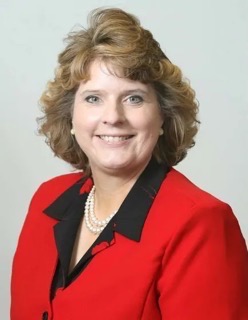
CARROLL, Iowa (March 3, 2026) – Sue Gehling began primary care work as a nurse practitioner in 1997 in rural Iowa when children with mental health care needs quickly grabbed her attention.
“Over the years, I listened to a lot of parents describe their stories to me – the despondency that they expressed, the frustration, the difficulties navigating the system. It was very moving, to be honest,” Gehling told The Iowa Mercury. “And it was upsetting to me and frustrating that our system makes it difficult for families to get the help that they need for their child when they need it.”
Gehling started providing “gap-filling” mental health services, and by 2014, returned to school to get dual certification as a psychiatric nurse practitioner.
One night, a lightbulb went off.
“I realized, you know what, the cavalry’s not coming,” Gehling told The Iowa Mercury. “They’re not coming out here to Carroll, Iowa to help me. If I don’t do something to help these families, then who will?”
In 2019, Gehling founded the Carroll-based Classroom Clinic, a school-based telehealth service that today provides individual therapy, psychiatric services and medication management to 53 public school districts from practitioners in Iowa and other states.
The idea was to create a model that could overcome rural patients’ lack of access to mental health services – that for some could be a several hour drive away – a deficit of providers in some regions of Iowa, and affordability.
Gehling took the Classroom Clinic concept to the Fort Dodge Small Business Development Center.
From there, she was directed to the Iowa State University StartUp Factory incubator to work through customer profiles, interviewing stakeholders, pain points and develop a solution to the mental health care access problem.
“It was a whole lot of digging my heels in and researching and educating myself. And then getting connected to experts in those areas to really figure out how we can make this work – how can we overcome all these barriers,” Gehling said. “That was the whole point. I wanted to make it simple for families to access services because it was just way too difficult.”
The biggest gaps were for children receiving Title 19 benefits and Medicaid. Gehling says that’s because many private health care agencies can decline taking on Medicaid patients because of the government program’s historically lower reimbursement rate when compared to private insurance.
“Access for kids that have Medicaid is even smaller and less available than access to the general population that has commercial insurance, and that’s simply because so many providers refuse to accept Medicaid,” she said. “Or if they do, they only accept a small proportion of the overall patient population as that Medicaid payer mix.”
Classroom Clinic is a for-profit company. Nearly 70% of Classroom Clinic’s patients are on Medicaid.
“That’s really our sweet spot, but we lose money on every single kid that we see, so we have to have a different revenue model – a different business model – to make this financially sustainable,” she said.
So the company’s customers are actually the school districts, which enters into a contract with Classroom Clinic that acts as a licensing fee for the company’s proprietary software to deliver the telehealth service.
It allows the mental health providers to connect, communicate and collaborate with the school, staff and parents all together, Gehling said. Schools pay for technology license fees and access to the scheduling and care coordination. Classroom Clinic also bills Medicaid or the student patient’s health insurer in order to make a profit.
“We braid those funding sources together … so we as a private company can actually function as essentially a safety net provider for these kids.”
According to Gehling, each school has two “captains,” usually the school nurse and/or counselor to help coordinate scheduling for the student patients. There is always a designated room designed to keep the student’s privacy where they can have their virtual session.
The company has been able to bring 25 therapists and three psychiatrist nurse practitioners into rural Iowa schools. Most are based in Iowa, but the virtual model allows Classroom Clinic to recruit providers nationally – currently Florida, Arizona, New York and North Carolina.
This summer, Classroom Clinic plans to launch a virtual group therapy option for students. Gehling says students will be put into groups of students from different school districts across Iowa with similar mental health needs and goals.
Some of the students have had significant trauma, Gehling said. Over time, without services, these children would be at risk of dropping out of school and entering the legal system.
“What we’re trying to do is to swim upstream and catch these kids early, so we can intervene and make a difference in their life as a teenager and adolescent as they transition into adulthood,” she said.
When current Mason City Community School Districts Superintendent Pat Hamilton was director of student services for Spencer community schools, he said the program brought “timely” mental health services to students.
“Students never waited more than a week to get services, whether it be counseling or whether it be mental health assessments,” he said in a 2022 video produced for the University of Iowa Scanlan School for Mental Health.
Working parents and rural families
For Clay County mom Andrea L., Classroom Clinic’s services gave her a way around the scarcity of rural mental-health services for her son who lives with diagnosed Attention Deficit and Hyperactivity Disorder and Oppositional Defiant Disorder. But she said in a Jan. 12 interview what she needed most was a provider that listened to her.
Andrea spoke with The Iowa Mercury on condition that her last name and other identifiers be withheld to maintain her son’s privacy.
“She (Gehling) listens. She takes into consideration what I observe, not just being like, ‘I am the professional. I’m going to do whatever I want,'” Andrea said.
Andrea’s son, now 14, began treatment with the Classroom Clinic when he was 11 years old, about a year after his father died. At the peak of his symptoms, Andrea said her son was on seven medications and was briefly admitted into a psychiatric institution. He cut an electric line in the basement, sabotaged the furnace, and set a fire in the kitchen.
“It was a scary time,” she said.
Andrea said she did not feel heard by her son’s psychiatrist who she says doubled his medication in over a two-week period. Gehling has reduced that to only Adderall. Andrea’s son open-enrolled to a district where Classroom Clinic does not provide services, but regulations have allowed him to be able to continue virtual services.
“I have two other kids, and it’s hard to just drop everything and drive two hours one way. And with school and fitting everything in,” Andrea said. “It’s helpful that she can see him over Zoom because we live in a kind of a resource desert. There’s not a lot of options up here. So it’s just been a very good fit.”
Scaling Classroom Clinic
Over the last two years, Classroom Clinic has grown by more than 200%, as the company has inked service contracts with more school districts and demand for youth mental health services in Iowa continues to rise.
The company is looking to scale.
In total, Classroom Clinic employs 45 people and Gehling brought on Allen Bierbaum, her business partner and the company’s chief executive officer.
Classroom Clinic’s impact report for July 1, 2024-June 30, 2025 says the business had 7,450 total visits over that 12-month period – 6,690 were therapy visits and 760 were psychiatry appointments. About 77.5% of first appointments were within 30 days of admission.
In the final six months of 2025, Classroom Clinic has already had more than half of their total visits for the prior year. Wait times for an initial appointment have dropped, according to the organization.
Many clinics in Iowa have a waitlist for pediatric psychiatric care and scheduling an appointment with a provider can take months, according to the United Way of Central Iowa.
Those are the metrics Classroom Clinic is working with as it prepares to go statewide with its services. According to Gehling, the business is currently operating in 53 school districts and 139 school buildings in Iowa.
But the Classroom clinic has service area gaps in several Northeast, Southeast and Southwest Iowa counties. Gehling is also looking to states like Nebraska, Kansas and South Dakota that have Medicaid reimbursement and education systems similar to Iowa for future expansion.
One thing that Gehling has been reluctant to seek is venture capital investment, she says for fear of outside influence.
“I’ve bootstrapped it this entire time,” she said. “I’ve not brought on any venture capital, which a lot of startup companies will bring in … because they need that infusion of cash to be able to scale significantly. We have wanted, because we’re true to the core of really considering ourselves a social entrepreneur (and) a woman in the trenches, I don’t want outside venture capital to skew our mission. And I think that happens. It’s really about providing the services more so than having a certain profit margin.”
Classroom Clinic has been awarded two grants by the Iowa Economic Development Authority, including a $100,000 Demonstration Fund loan in 2023 to assist with hiring personnel and market research and entry activities.
Although the cavalry has not yet arrived, Gehling says the state officials have made some meaningful strides in the last two years to prop up the mental health care systems. The state drafted a two-year Behavioral Health Service System Statewide Plan.
Gov. Kim Reynolds signed legislation in 2024 to consolidate the state’s 13 Mental Health and Disability Service regions into seven regions. Last year, the Iowa Department of Education awarded more than $2 million in grants to eight school districts for therapeutic classrooms to aid students with mental health needs.
Those steps came shortly before federal setbacks, as congress passed President Donald Trump’s One Big Beautiful Bill Act that included $911 billion in cuts coming from changes to the Medicaid program.
“It’s funneled down to states, and states have to trim their Medicaid budget and their education budget,” Gehling said. “It’s chicken vs. egg. We have to have some funding to support these services early on and that will save so much money downstream in terms of more intensive services that the state has to pick up in other areas.”
Carrying the weight
Gehling’s eyes might be on other states, but the Classroom Clinic remains an Iowa-based company. She says practicing in Carroll, you’re a member of the community.
“Families come up to you, like when you’re in Walmart or Hy-Vee and your kids are on the same volleyball team as some of your patients. And it’s natural for families to come up and say, ‘can you help me with this’ or ‘my child is having this problem.’ So you’re approached often,” she said. “That carries over even though we’re virtual.”
It’s not uncommon for Gehling to get Christmas cards from patients and offers to go to the legislature to talk about the program and mental health. For Gehling and her practitioners, it’s important to me to make sure they’re taking care of themselves to be 100 percent for their patients.
“You carry the weight of the pain that these families experience,” Gehling said. “You feel bad. You kind of have to be able to take care of ourselves and refill our own cups so we can still serve these families.”
-30-
About The Author
(Mike Mendenhall is a regular contributor to The Iowa Mercury. Mendenhall is a 15-year journalist, editor and reporter working in Florida and Iowa. A native of Des Moines’ Eastside and a graduate of the University of Iowa School of Journalism and Mass Communications, Mike is a former associate editor of the Des Moines Business Record and past editor in chief of the Newton Daily News. He covers city and state government in Jacksonville, Florida, and has worked for private and public media outlets.)
ABOUT THE IOWA MERCURY
(Douglas Burns, founder of The Iowa Mercury and a fourth-generation Iowa journalist from Carroll, is a member of the Iowa Writers’ Collaborative. Read dozens of the most talented writers in Iowa in just one place. The Iowa Writers’ Collaborative spans the full state. It’s one of the biggest things going in Iowa journalism and writing now – and you don’t want to miss. This collaborative is – as the outstanding Quad Cities journalist Ed Tibbetts says – YOUR SUNDAY IOWA newspaper.)
To download full size image, right click and select Save image as